When you come to Cusco, it is not enough to go hiking on the Salkantay trek, Ausangate trek, or visit the Sacred Valley; to experience Cusco to the fullest, you also need to immerse yourself in Inca culture and the history of rural communities. There is no better way to do that than by speaking Quechua!
At Travel Peru Agency, we know that the true essence of the Andes and living culture lies in the people who keep it alive, who, through Quechua (Runasimi), preserve age-old customs and traditions. That is why, so that you can experience an authentic cultural immersion, we teach you the main Quechua phrases you need to know.
Experience the Culture with These Quechua Phrases
Every time a tourist tells us the Quechua words they learned during their visit to the community of Huilloc or Chinchero, we laugh together because they learn words with a humorous colloquial meaning. This is because the Quechua language is cheerful, expressive, affectionate, and deeply connected to Mother Earth (Pachamama), the community, and contains an extensive vocabulary with both a colloquial meaning and a literal meaning. In short, it is quite an interesting language to learn!
Over the years, Quechua has gone through various periods when, in cities such as Lima, it was a source of ridicule and discrimination. Despite this, thousands of Quechua-speaking families have passed this language down from generation to generation. Therefore, if you come to Cusco and wish to immerse yourself in the culture, it is necessary to learn some essential Quechua phrases. At Travel Peru Agency, we have prepared a list of the essential Quechua phrases for your next trip.
Essential Quechua Phrases
- Good morning!: Allin P’unchay
- My name is ______ : Noqaq Sutiymi _______
- I am from ____ : Noqa Kani _____
- I really like traveling to Cusco: Anchata munani puriyta Qosqoman.
- How can I get to this place? : Imaynatataq chayayman kayman?
- Excuse me, do you know where _____ is?: Tapuyukusayki, Maypin tarikun _____?
- What places should I visit?: Maykunatataq riqsiq Riyman?
- How much does this cost?: Hayk’ataq Kayri?
- Can you tell me more about this?: Willaykuhuankimanchu aswanta kaymanta?
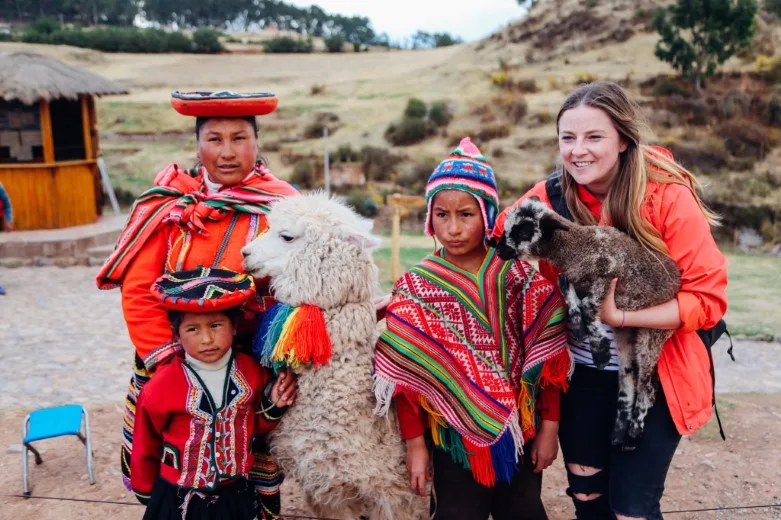
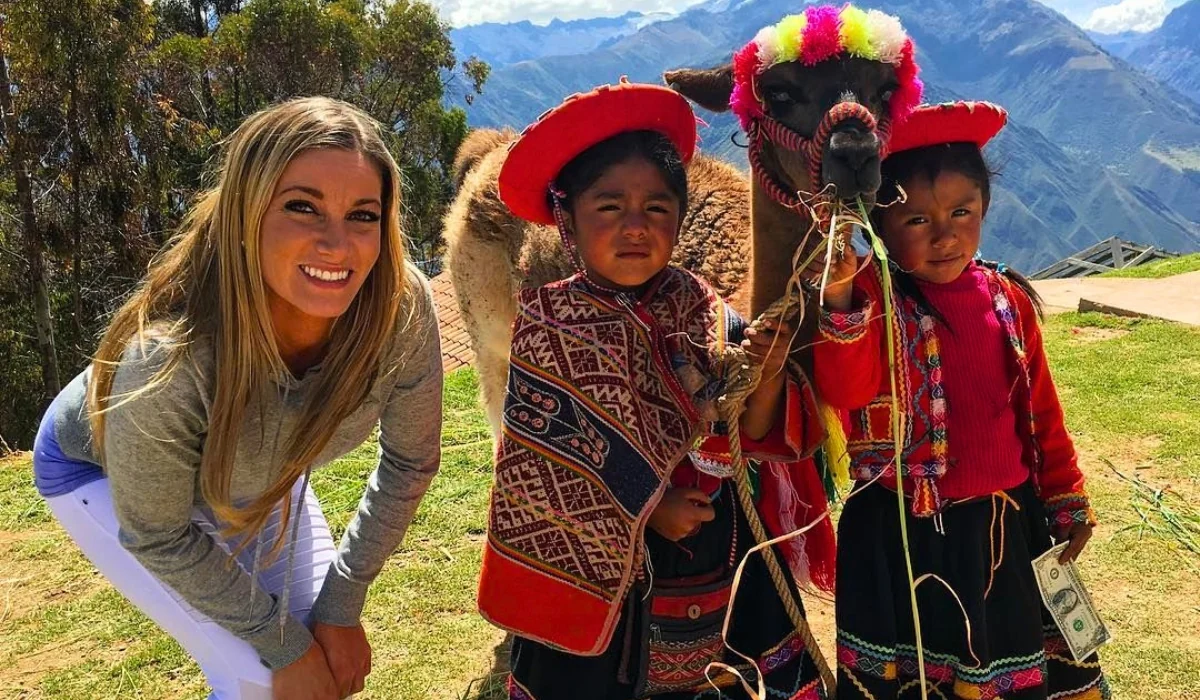
- How beautiful your little alpaca is: Munaychallana paqochayki
This phrase is quite useful when you want to take a photo with a small alpaca.
- Thank you, I liked the food: Uspalay, sumaqllana mikhunayki kaska.
- What places can I visit in Cusco?: Maykunatataq ritsiq riyman Qosqopi?
Greetings in Quechua
- Good afternoon: Allin sukha
- Good night: Allin tuta
- Have a good evening: Allin Ch’isi
- Likewise to you: Hinallataq qanpaqpas
Farewells in Quechua
- See you tomorrow: Paqarinkama
- See you in the afternoon: Sukhakama
- See you tonight: Tutakama
- See you the day after tomorrow: Minchhakama
- Until I return: Kutimunaykama
- Until we meet again: Tupananchiskama
Expressions to Show Courtesy and Gratitude in Quechua
- I am grateful: Sumaqllaña
- I am very happy: Anchata kusikuni
- Thank you: Añay
- I thank you: Añaychayki
- I thank you very much: Anchata añaychakuyki
- Please: Ama hina kaychu
- Sorry or excuse me: Pampachaykuway
Common Expressions to Ask About a Location
- Where?: May
- Where from?: Maymanta?
- Where are you from?: Maymanta kanki
- From where?: Maymantaraq
- Where are you coming from?: Maymantaraq hamushanki?
- Just now?: Chayraqchu
- Are you just arriving?: Chayraqchu hamushanki
Numbers in Quechua:
- One: Huk
- Two: Iskay
- Three: Kinsa
- Four: Tawa
- Five: Pisqa, Phisqa
- Six: Soqta
- Seven: Qanchis
- Eight: Pusaq
- Nine: Isqon
- Ten: Chunka
- Twenty: Iskay chunka
- One hundred: Pachaq
- Two hundred: Iskay pachaq
- One thousand: Waranqa
- Two thousand: Iskay waranqa
Family in Quechua
- Mom: Mantay
- Dad: Tayta
- Son: Churi
- Daughter: Ususi
- Baby: Wawa
- Sister (sister of a woman): Ñaña
- Sister (sibling of a man): Pana
- Brother (brother of a woman): Tura
- Brother (brother of a man): Wayqe/ Wawqi
- Husband: Qosa
- Wife: Yana
- Grandfather: Awichu / Apucha / Hatun Taytayki
- Grandmother: Awicha / Hatucha / Hatun mamayki
Simple Conversations in Quechua
Now that you are an expert traveler in Quechua words and phrases, learn how to use them in short conversations!
When You Want to Ask About Food
- What is there to eat?: Ima mihunacha kashan?
- What do you have to drink?: Ch’akipaq imachan kashan?
When You Want to Ask About a Location
- Where am I?: Maypin kashani?
- How do I get to the Plaza de Armas?: Imainatan chayayman Plaza de Armasman?
It is important to highlight that there are names of locations that do not have a translation in Quechua.
Remember that learning the Quechua language before traveling to Cusco also means:
- Promoting responsible tourism: by learning the local language, you support the preservation of the language of the Incas.
- Having a cultural experience on your next trek. For those who love hiking routes such as the Lares trek, Salkantay trek, Inca Trail, or Huchuy Qosqo trek, knowing Quechua phrases will help you reach your destination more safely.
5 Facts You Probably Didn’t Know About Quechua
- The Quechua we know today is different from the Quechua spoken by Inca royalty. During the Spanish colonization process, the Inca nobility was persecuted, repressed, and disappeared. Therefore, the variant of Quechua spoken only by this small group also disappeared.
- The Quechua language is considered the largest Indigenous language in all of the Americas, and it is spoken by between 8 and 10 million people.
- In Peru, the number of Quechua speakers reaches 4 million, representing 14% of the Peruvian population.
- Throughout Peru, there are variations of Quechua, such as Chanka Quechua, which is different from Cusco Quechua. Therefore, there are occasions when people debate “which Quechua is better”; however, it is important to emphasize that there is no Quechua better than another, as each one conveys the millennia-old Inca history.
- The Quechua-speaking community is present in seven countries in the Americas, with Peru, Chile, Bolivia, Argentina, Colombia, and Brazil being the countries where it is most widely spoken.
Adventure and Culture on Your Next Trek in Cusco
Cusco is known for having one of the best treks in all of the Americas: the Inca Trail. However, in the imperial region, you will find dozens of trekking routes that will take your breath away and force you to push your limits. Here we tell you which routes combine hiking, adventure, and culture.
- Lares Trek to Machu Picchu: it is the only route that begins with a relaxing bath in the Lares hot springs. From the first day, you can explore the Lares Mountains (Calca), walk near llamas and alpacas, and learn about local textiles. It is the best opportunity to use Quechua phrases!
- Inca Trail to Machu Picchu: while visiting iconic places such as Llaqtapata (agricultural terraces), the Warmiwañusqa Pass (a true challenge), Sayacmarca, Wiñay Wayna, and more, you will be accompanied by porters from rural communities who speak the Quechua language. Talking with them will allow you to learn the authentic secrets of the Inca Trail before entering Machu Picchu.
- Waqrapukara: many people get lost before reaching this impressive fortress. Waqrapukara is surrounded by the Apurimac Canyon and has the peculiar shape of two horns. On your way to this fortress, you will visit small towns such as Pomacanchi, where the oldest residents speak only the Quechua language. If you learn essential Quechua phrases, you will be able to communicate with them easily! You can do this hiking route on your own or book the Waqrapukara tour with us.
- T’aqrachullo: without a doubt, it is the latest jewel of the Andes. The imposing T’aqrachullo temple is located in Espinar (Cusco). Although most people in this province speak Spanish and Quechua, if you want to discover the authentic secrets of T’aqrachullo, you must talk with the older people in the area who are Quechua speakers!
Without a doubt, there is no better way to immerse yourself in Inca culture than by learning the Quechua language. Discover Cusco like a local with Travel Peru Agency. Book your trip here.